Red Light Therapy
Benefits, Types, How It Works, and What to Expect with Red Light Therapy in Oakville
Red light therapy has become one of the fastest-growing wellness treatments, offering a non-invasive way to support recovery, skin health, pain relief, and overall well-being. Originally developed for medical and scientific research, it is now widely used in wellness clinics, rehabilitation facilities, gyms, and even at home.
Whether you’re looking to reduce muscle soreness after a workout, improve your skin, or support your body’s natural healing process, red light therapy may be a valuable addition to your wellness routine.
Let’s explore how red light therapy works, the different types available, its potential benefits, and who may benefit the most.
What Is Red Light Therapy?
Red light therapy (RLT), also known as photobiomodulation (PBM) or low-level light therapy (LLLT), uses specific wavelengths of red and near-infrared light to stimulate the body’s cells.
Unlike UV light from the sun, red light therapy does not damage the skin or cause tanning. Instead, the light penetrates the skin and is absorbed by the mitochondria—the “powerhouses” of your cells. This process helps support cellular energy production, allowing the body to repair and recover more efficiently.
Treatment is painless, non-invasive, and typically lasts between 10 and 20 minutes.
How Does Red Light Therapy Work?
When red and near-infrared light reaches your cells, it stimulates the mitochondria to produce more ATP (adenosine triphosphate), the body’s primary source of cellular energy.
With more available energy, cells can perform their natural functions more efficiently, including tissue repair, collagen production, circulation, and recovery.
Because it works at the cellular level, red light therapy is used for a wide variety of wellness and rehabilitation applications.
Different Types of Red Light Therapy
There are several forms of red light therapy, each designed for different treatment goals.
Full-Body Red Light Therapy
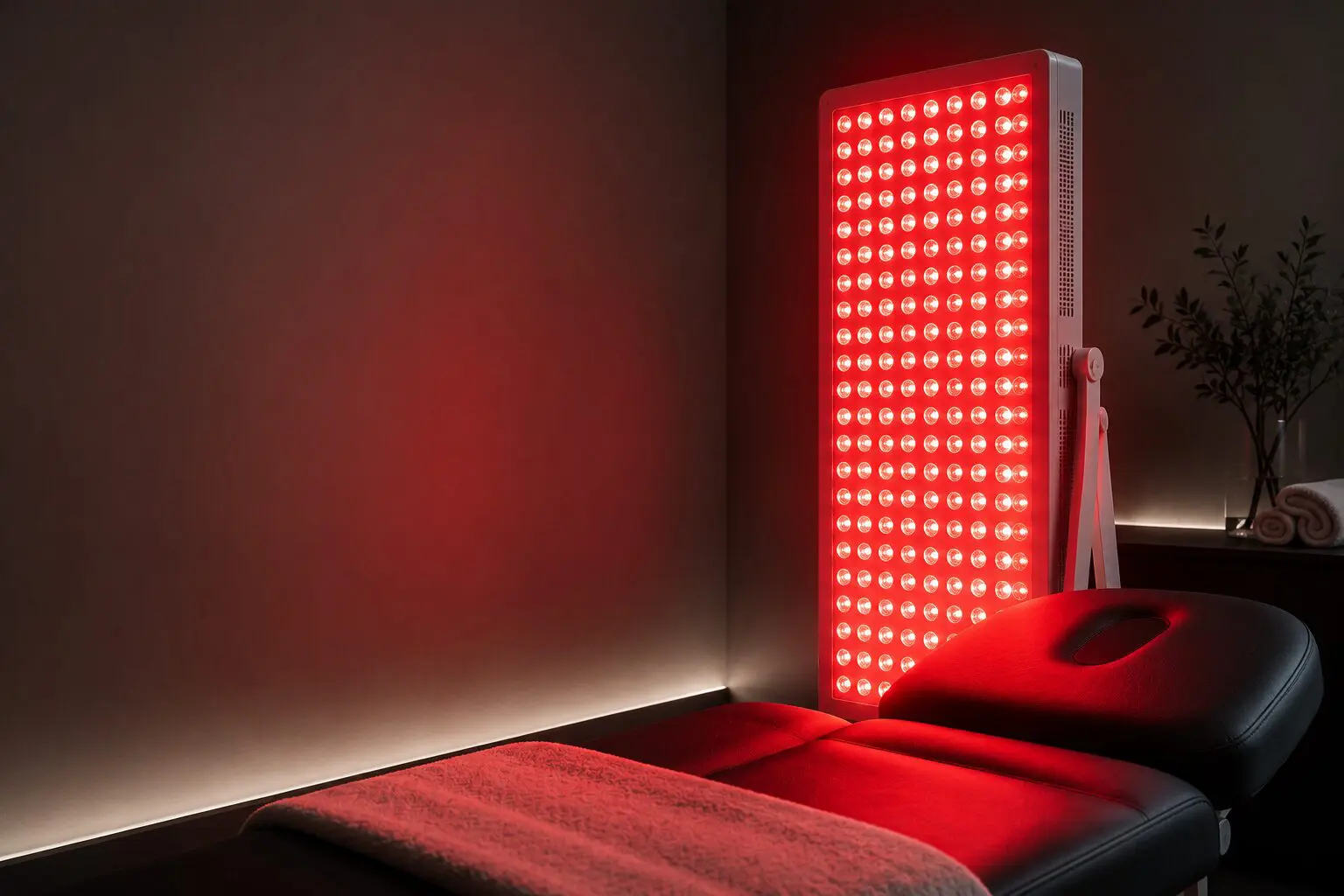
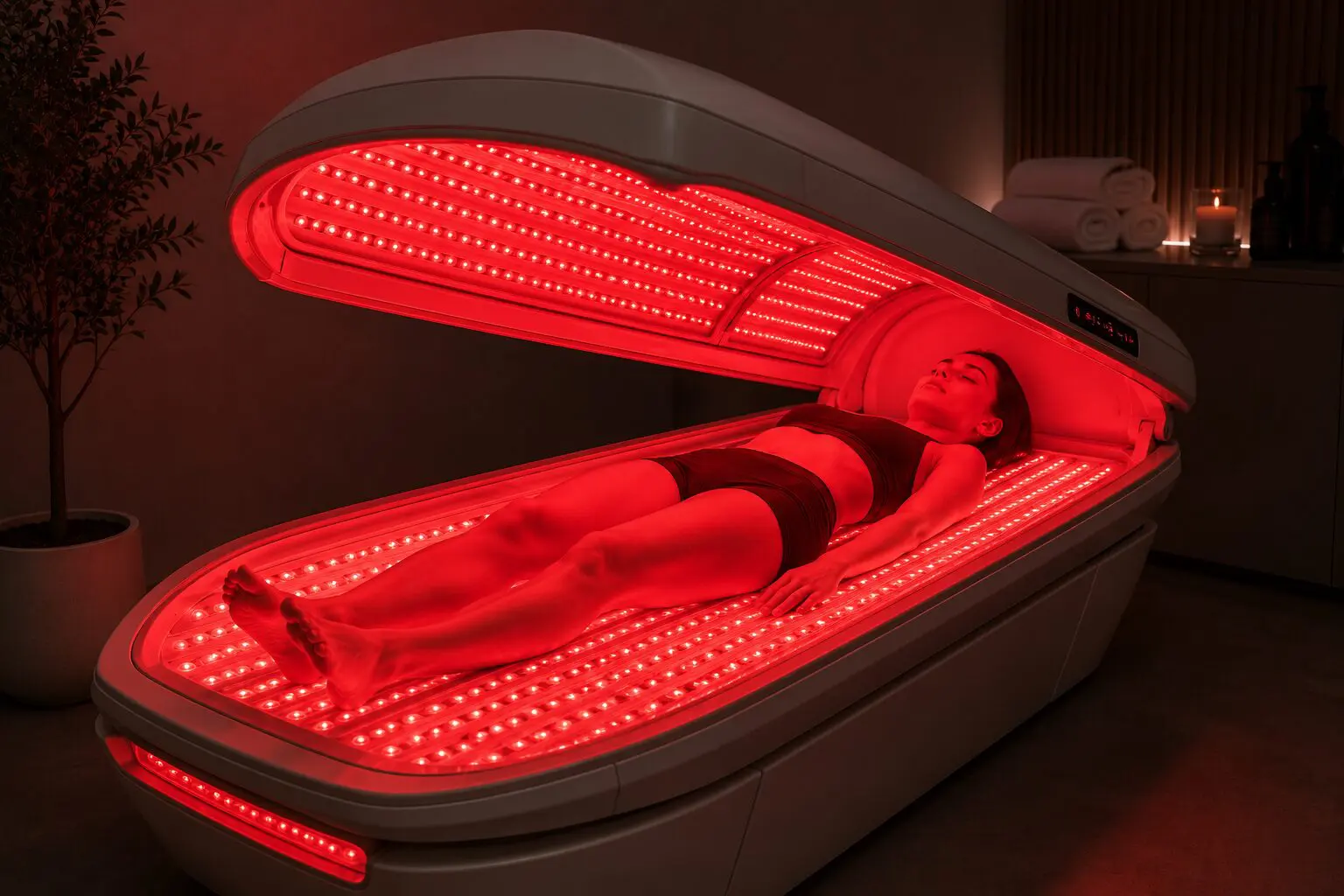
Large LED panels expose the entire body to red and near-infrared light, making this one of the most popular options for overall wellness, athletic recovery, and inflammation management.
Targeted Red Light Therapy
Smaller handheld devices or localized panels treat specific areas such as the knees, shoulders, neck, back, or joints.
Near-Infrared (NIR) Therapy
Near-infrared light penetrates deeper into muscles, joints, tendons, and connective tissues, making it particularly useful for recovery and pain management.
Red Light Facial Therapy
Designed specifically for the face, these treatments are commonly used to support collagen production, improve skin tone, reduce fine lines, and promote healthier-looking skin.
LED Light Masks
At-home LED masks provide convenient facial treatments and are commonly used for skin rejuvenation and acne management.
Benefits of Red Light Therapy
Red light therapy may provide several health and wellness benefits.
Supports Muscle Recovery
Many athletes use red light therapy to reduce post-workout muscle soreness and promote faster recovery between training sessions.
Helps Reduce Pain
Research suggests red light therapy may help relieve discomfort associated with muscle strains, tendon injuries, arthritis, and chronic pain conditions.
Improves Skin Health
Red light therapy stimulates collagen production, which may improve skin texture, reduce the appearance of fine lines, and support overall skin health.
Encourages Tissue Repair
By supporting normal cellular function, red light therapy may help accelerate the body’s natural healing process following injuries or physical activity.
Improves Circulation
Red light therapy may increase local blood flow, delivering oxygen and nutrients more efficiently to tissues.
Reduces Inflammation
Many people use red light therapy to help manage inflammation associated with exercise, overuse injuries, and certain chronic conditions.
Supports Overall Wellness
Regular sessions may contribute to improved recovery, healthier skin, increased comfort, and enhanced physical performance when combined with a healthy lifestyle.
Who Can Benefit?
Red light therapy may benefit:
- Athletes and active individuals
- People recovering from exercise or injury
- Individuals experiencing muscle or joint discomfort
- People looking to improve skin health
- Office workers with neck or back tension
- Anyone interested in supporting overall wellness and recovery
What Does a Typical Session Look Like?
A typical session lasts 10–20 minutes, depending on the treatment area and device being used.
During treatment, you’ll stand, sit, or lie comfortably in front of a red light panel or targeted device. The treatment is painless, produces little to no heat, and requires no recovery time, allowing you to return to your normal activities immediately afterward.
Is Red Light Therapy Safe?
Red light therapy is considered safe for most healthy individuals when used appropriately.
However, if you are pregnant, have a medical condition, take medications that increase light sensitivity, or have concerns about eye health, consult your healthcare provider before beginning treatment. Protective eyewear may be recommended depending on the device being used.
Final Thoughts
Red light therapy is a safe, non-invasive treatment that supports the body’s natural healing processes at the cellular level. Whether your goal is improved recovery, healthier skin, reduced muscle soreness, or enhanced overall wellness, red light therapy offers a convenient and effective option for many individuals.
When combined with regular exercise, quality sleep, proper nutrition, and hydration, red light therapy can become a valuable part of your long-term health and recovery routine.