The History of Extracorporeal Shockwave Therapy
From Kidney Stones to Modern Pain Relief
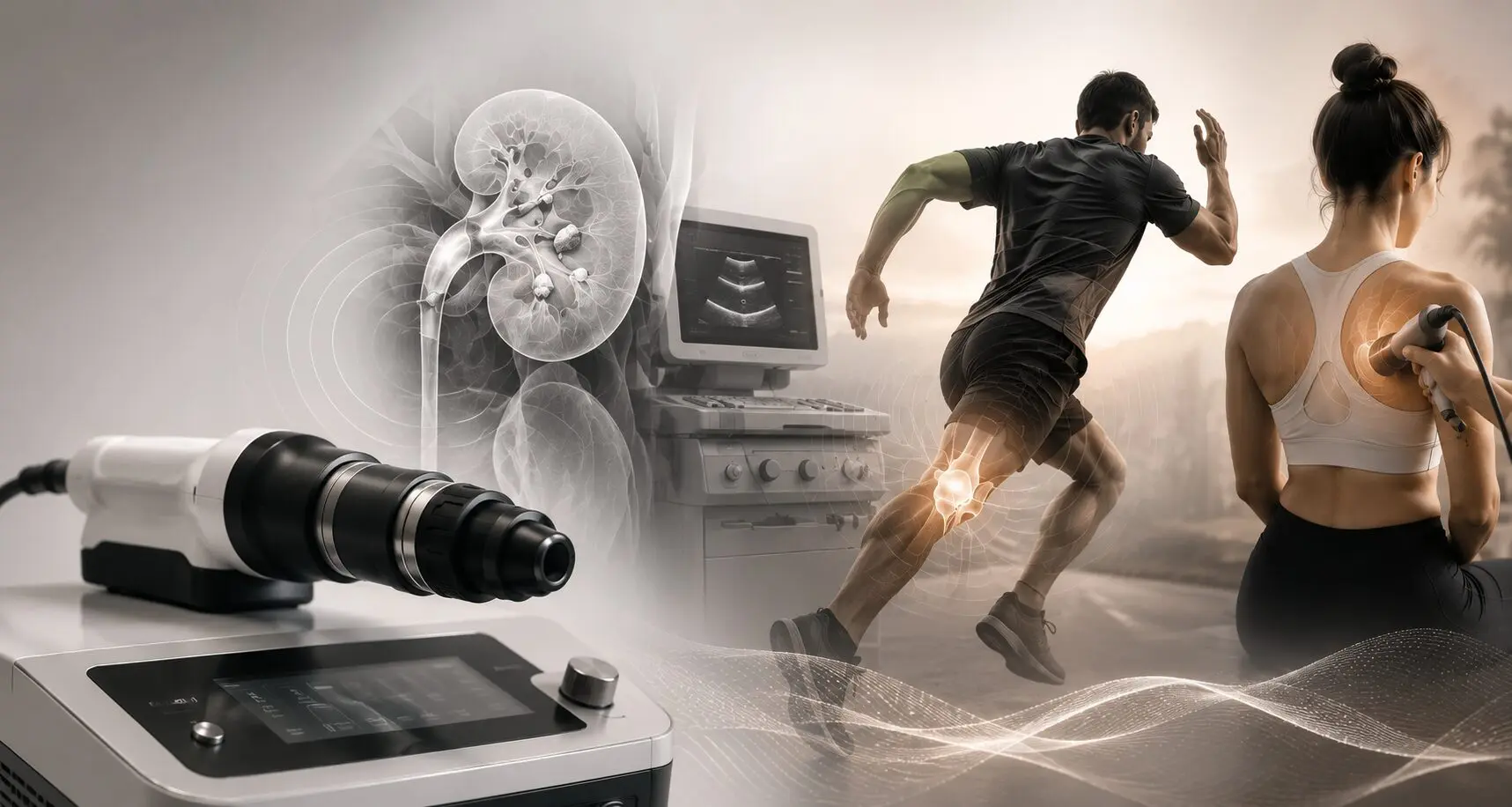
Extracorporeal Shockwave Therapy (ESWT) has become a trusted treatment for stubborn musculoskeletal injuries, helping people recover from chronic pain without surgery or lengthy downtime. While it may seem like a modern innovation, its origins actually date back more than 40 years.
Here’s how shockwave therapy evolved from treating kidney stones to becoming a valuable tool in sports medicine and rehabilitation.
Where It All Began
The story of shockwave therapy started in the 1970s when researchers began exploring how acoustic shockwaves could be used in medicine.
Their breakthrough came in the early 1980s with the development of lithotripsy—a procedure that used focused shockwaves to break apart kidney stones without the need for surgery.
This revolutionary treatment transformed urology and proved that high-energy sound waves could safely interact with human tissue.
A New Discovery
As physicians continued using shockwave technology, they noticed something unexpected.
Patients weren’t just healing from kidney stone procedures—they also showed improvements in surrounding bone and soft tissue.
Researchers discovered that shockwaves stimulated the body’s natural healing response rather than simply masking pain.
This finding opened the door for an entirely new field of treatment.
Expanding Into Orthopedics and Sports Medicine
Throughout the 1990s, shockwave therapy began gaining popularity for orthopedic conditions.
Clinicians started using it to treat chronic tendon injuries and areas that had been slow to heal with traditional approaches.
Today, ESWT is commonly used for conditions such as:
- Plantar fasciitis
- Tennis elbow
- Golfer’s elbow
- Achilles tendinopathy
- Patellar tendinopathy (jumper’s knee)
- Shoulder tendinopathy
- Hip pain
- Calcific shoulder tendinitis
As research continued to grow, shockwave therapy became an increasingly common treatment option in sports medicine clinics around the world.
How Shockwave Therapy Works
Unlike treatments that only reduce symptoms temporarily, shockwave therapy aims to stimulate the body’s own healing processes.
The acoustic waves help:
- Increase blood circulation
- Stimulate tissue repair
- Encourage collagen production
- Improve tendon healing
- Break down calcified tissue in certain conditions
- Reduce chronic pain
Because it promotes healing rather than simply covering up pain, many patients experience lasting improvements over time.
From Elite Athletes to Everyday Patients
Although professional athletes helped popularize shockwave therapy, it isn’t reserved for elite competitors.
Today, ESWT is used by people of all activity levels, including:
- Recreational athletes
- Weekend warriors
- Office workers
- Active adults
- Seniors looking to stay mobile
Whether you’re training for a marathon or simply want to walk without heel pain, shockwave therapy may be part of a comprehensive treatment plan.
The Evolution of Modern Shockwave Therapy
Technology has continued to improve significantly since the first shockwave devices were introduced.
Modern systems allow practitioners to deliver treatments with greater precision and comfort while tailoring therapy to each patient’s condition.
Many clinics now use radial or focused shockwave technology depending on the injury being treated, allowing for individualized care.
Why Shockwave Therapy Continues to Grow
As more research has emerged, shockwave therapy has become an increasingly popular non-invasive option for managing chronic tendon injuries and musculoskeletal pain.
Its ability to stimulate the body’s natural healing response—without injections or surgery—has made it a valuable tool for both healthcare providers and patients seeking conservative treatment options.
The Bottom Line
What began as a groundbreaking treatment for kidney stones has evolved into one of the most widely used regenerative therapies in musculoskeletal care.
Today, Extracorporeal Shockwave Therapy is helping people recover from persistent pain, improve function, and return to the activities they enjoy. As technology and research continue to advance, its role in sports medicine and rehabilitation is likely to keep expanding, offering new possibilities for healing without surgery.