

Understanding Cryotherapy
Cryotherapy: Benefits, How Often You Should Go, and What to Expect
If you’ve spent time in the wellness or fitness world, you’ve probably heard people talking about cryotherapy. From professional athletes to busy parents and people living with chronic pain, more and more individuals are turning to cold therapy to support recovery, reduce inflammation, and improve overall well-being.
But what exactly is cryotherapy, and is it worth trying?
Let’s explore how it works, its potential benefits, how often you should go, and who may benefit the most.
What Is Cryotherapy?
Cryotherapy simply means “cold therapy.” While applying ice to an injury is one form of cryotherapy, whole-body cryotherapy takes it a step further.
During a whole-body cryotherapy session, you’re exposed to extremely cold temperatures—typically between -110°C and -140°C (-166°F to -220°F)—for approximately 2 to 3 minutes. The cold is dry rather than wet, making it much more tolerable than an ice bath.
The goal isn’t to freeze the body. Instead, the brief exposure triggers a series of natural physiological responses that may help support healing, recovery, and overall wellness.
How Does Cryotherapy Work?
When your body is exposed to intense cold, your blood vessels temporarily constrict, directing blood toward your vital organs to help maintain core temperature.
After the session, your blood vessels reopen, allowing oxygen-rich blood to circulate back through your muscles and tissues. This process may help reduce inflammation while delivering nutrients that support recovery.
Cryotherapy also stimulates your nervous system and may trigger the release of endorphins—the body’s natural “feel-good” chemicals—which is one reason many people report feeling energized and refreshed after treatment.
Benefits of Cryotherapy
Although research is still evolving, many people experience noticeable improvements after regular cryotherapy sessions.
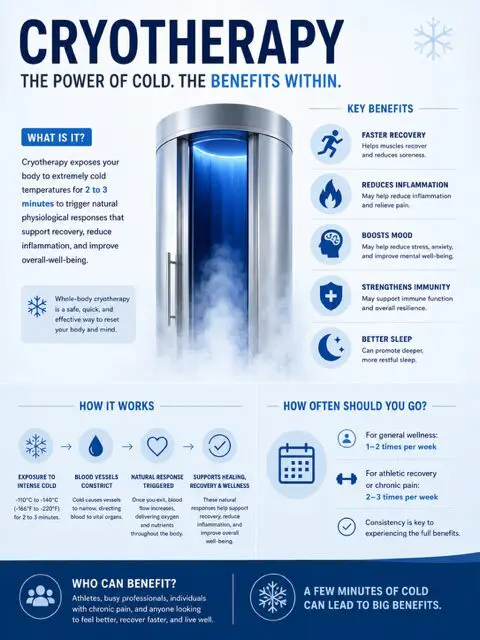
Reduced Inflammation
Inflammation is a normal part of healing, but when it becomes chronic, it can contribute to pain and reduced mobility.
Cold exposure may help reduce inflammatory processes, making cryotherapy popular for people dealing with:
- Joint pain
- Arthritis
- Tendon irritation
- Sports injuries
- Muscle soreness
Faster Recovery
Athletes often use cryotherapy to recover more quickly between workouts or competitions.
Potential recovery benefits include:
- Less delayed-onset muscle soreness (DOMS)
- Reduced muscle fatigue
- Quicker return to activity
- Improved training consistency
Pain Relief
Cold temporarily slows nerve conduction, which may reduce pain signals reaching the brain.
Many people use cryotherapy to help manage:
- Neck pain
- Back pain
- Shoulder pain
- Knee pain
- Chronic muscle tension
Increased Energy and Mood
One of the most commonly reported benefits is feeling refreshed after a session.
The release of endorphins and adrenaline may leave people feeling:
- More alert
- More energized
- Less stressed
- Mentally refreshed
Some individuals also report improvements in sleep and overall mood after regular treatments.
Improved Circulation
The alternating constriction and dilation of blood vessels may help stimulate healthy circulation throughout the body.
Better circulation supports tissue recovery by delivering oxygen and nutrients where they’re needed most.
Supports an Active Lifestyle
Whether you’re training for a marathon, working long hours at a desk, or chasing after young children, recovery matters.
Cryotherapy can be one tool to help your body recover more efficiently so you can continue doing the activities you enjoy.
How Often Should You Do Cryotherapy?
The ideal frequency depends on your goals.
For General Wellness
Many people benefit from 1–2 sessions per week to support recovery, energy, and overall wellness.
For Pain or Injury Recovery
If you’re dealing with an acute injury or flare-up, your provider may recommend 2–5 sessions per week during the initial phase.
As symptoms improve, treatments are often spaced farther apart.
For Athletes
Competitive athletes sometimes use cryotherapy after intense training sessions or competitions to help manage muscle soreness and support recovery.
Your provider can recommend a schedule based on your training load.
What Happens During a Session?
A typical whole-body cryotherapy appointment is quick and straightforward.
Before entering the chamber, you’ll receive protective gloves, socks, slippers, and other necessary coverings for sensitive areas.
Once inside, you’ll remain standing while cold air surrounds your body for approximately 2–3 minutes.
During the treatment, staff monitor you closely to ensure you’re comfortable and safe.
Many people describe the experience as invigorating rather than painful.
Afterward, it’s common to feel:
- Warm as circulation returns
- Energized
- More mobile
- Less stiff
Because the session is so brief, many people fit cryotherapy into their lunch break or before heading home from work.
Is Cryotherapy Safe?
For most healthy adults, cryotherapy is considered safe when performed under the supervision of trained professionals using appropriate equipment.
However, cryotherapy may not be suitable for everyone.
It is generally not recommended for individuals with certain conditions, including:
- Uncontrolled high blood pressure
- Severe cardiovascular disease
- Raynaud’s disease
- Cold hypersensitivity or cold urticaria
- Certain circulation disorders
- Pregnancy (unless cleared by a healthcare provider)
Always discuss your medical history with your provider before beginning treatment.
Cryotherapy Is Most Effective as Part of a Bigger Wellness Plan
Cryotherapy isn’t a magic cure, nor does it replace healthy habits.
The best results typically come when it’s combined with other healthy lifestyle practices, including:
- Regular movement and exercise
- Chiropractic care
- Proper nutrition
- Quality sleep
- Hydration
- Stress management
Together, these strategies help your body recover, adapt, and function at its best.
Is Cryotherapy Right for You?
Whether you’re recovering from tough workouts, managing chronic aches, or simply looking for another way to support your health, cryotherapy may be worth considering.
Many people notice improvements in recovery, energy, and mobility after incorporating regular sessions into their wellness routine.
If you’re unsure whether cryotherapy is right for you, speak with a qualified healthcare provider who can help determine if it’s appropriate based on your health history and goals.
Final Thoughts
Recovery isn’t just for elite athletes—it’s essential for everyone.
By helping reduce inflammation, ease soreness, and support your body’s natural recovery processes, cryotherapy offers a fast, non-invasive option for people looking to feel and function their best.
Combined with movement, chiropractic care, and healthy lifestyle habits, cryotherapy can become an effective part of your long-term wellness routine.